Thought Leadership
From Queues to Citizen Experience: How Physical Intelligence Is Reshaping the Public Service Center
Citizens today don't compare your service desk to last year's service desk — they compare it to Apple, to Amazon, to the best 90 seconds they had this week. Here's how Physical Intelligence closes the gap between throughput-thinking and citizen-experience-thinking.
Pulses.aiEditorial5 min read

For decades, the success of a government service center was measured by a single number: how many citizens it processed. Throughput. Headcount served. Volume in, volume out. That metric is no longer enough.
Citizens today expect their interaction with government to feel as effortless as their interaction with their bank, their airline, or their favourite app. They don't compare your service desk to last year's service desk — they compare it to Apple, to Amazon, to the best 90 seconds they had this week. The bar is no longer operational. It's experiential.
The problem is that the systems most governments use to measure their service centers were built for the old bar.
The Blind Spots in a Traditional Service Center
Walk into almost any public service hall in the region and you'll find the same toolkit: a ticket-dispenser at the entrance, a queue display above the counters, and a CCTV system bolted to the ceiling for security. Together they tell you almost nothing about the experience of being a citizen inside that building.
You know how many tickets were issued. You don't know how long the average citizen actually waited. You know which counters were open. You don't know whether the people standing in front of them looked confused or calm. You know there were no security incidents. You don't know whether the family of four in the corner gave up and walked out before being served.
This is the gap Pulses was built to close.
A Different Lens: Physical Intelligence
Pulses.ai is a Physical Intelligence platform. We don't deliver footage to review. We deliver decisions to act on, in real time. Inside a public service environment, that means converting the chaotic flow of people, queues, and counters into a clean, structured stream of operational and experiential data.
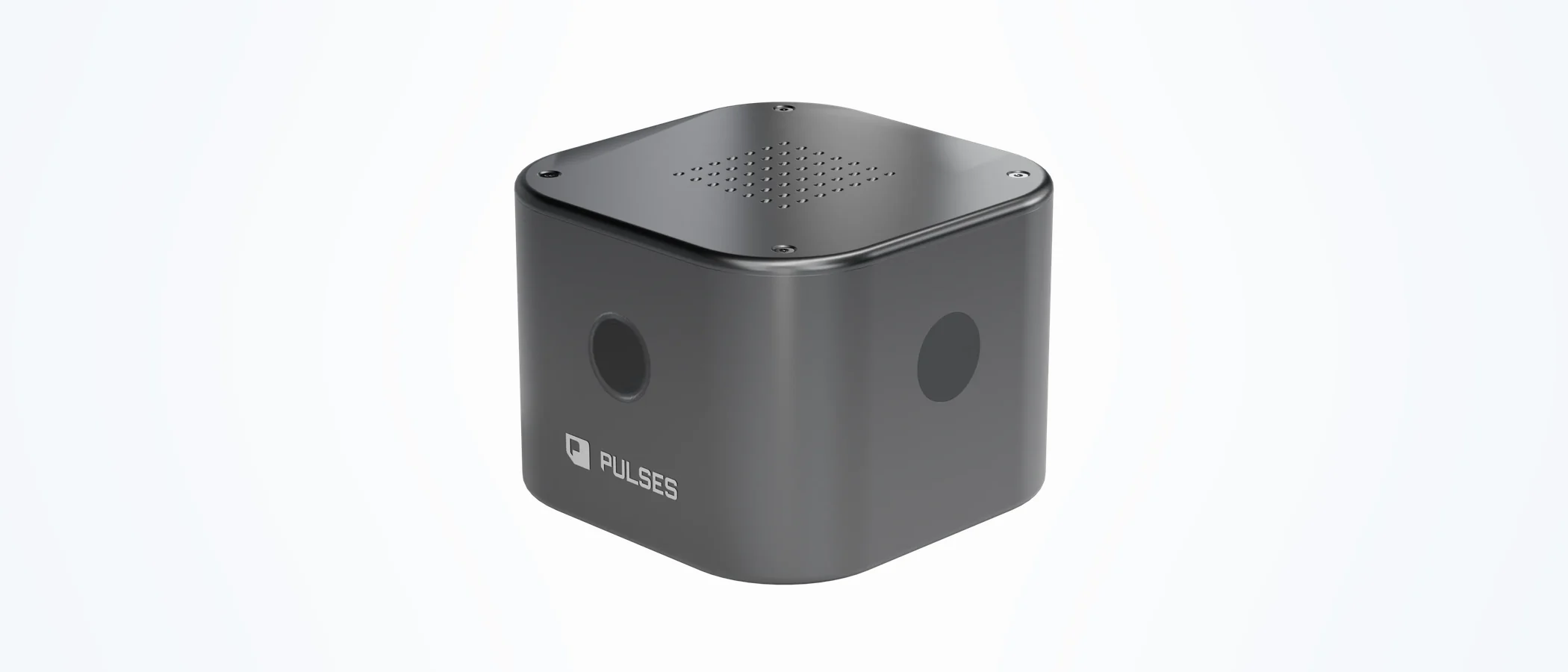
The architecture is simple. Pulses Vision Devices observe the floor. Pulses OS turns what they see into intelligence. The platform splits naturally into the three things government leaders need to know about their service centers:
- Pulses CX — the citizen journey. Dwell time at each touchpoint, queue-to-counter wait, and friction points where people hesitate or backtrack. This is the data layer that turns "we processed 3,400 citizens today" into "the average citizen waited 14 minutes at counter 7."
- Pulses Ops — throughput, capacity, and SLAs. Live counts of people in each queue, real-time bay utilization, average handle times per service type, and SLA alerts the moment a wait crosses an internal threshold. Supervisors no longer chase a problem after it's happened; they're notified the moment one starts to form.
- Pulses Compliance — standards and safety. Contactless authentication at restricted-area kiosks. Perimeter alerts. Hygiene and safety enforcement where it matters. Audit evidence that is structured and continuous.
Built for Sovereign Deployment
Government environments demand control. Pulses can run fully on-premises, on a Pulses Appliance inside the agency's own data center, with no dependency on a hyperscaler and no inbound network ports.
For agencies that prefer cloud agility, the same platform runs on Microsoft Azure under MACC-eligible commercial terms. For mixed-sensitivity portfolios, hybrid is supported out of the box. The architecture adapts to the agency — not the other way around.
What "Better" Looks Like
When a public service center runs Pulses, wait times become a managed metric instead of a complaint. Supervisors open a dashboard instead of walking the floor to find out what's wrong. Leadership can ask how long people waited, not only how many were served. And audit teams start from structured evidence instead of a blank page.
The technology is invisible. The improvement is not.
"Insights, not images." The shift from throughput-thinking to citizen-experience thinking is happening across modern governments in the region. Pulses.ai exists to make that shift quietly, securely, and at scale.
Ready to begin?
See what your service center actually looks like: book a demo.