Thought Leadership
Live Data from Load-In Day: Why Event Operators Are Replacing Clipboards with Physical Intelligence
Most major events end the same way: lights down, doors closed, and a slow manual reconciliation that lands two weeks later. Here's how Pulses Vision Tower gives the floor team live numbers during the event.
Pulses.aiEditorial5 min read
Most major events end the same way. Lights down, doors closed, security packs up. Somewhere in a back office, a team begins the slow, manual reconciliation: door scans, RFID wristband logs, ticket counts, vendor reports, a few hand-tallied clipboards from the floor leads. Two weeks later, a post-event report lands in the inbox of the people who paid for the event. By then, the next event is already half-built — and the lessons from the last one are too late to apply.
This is how the events industry has measured itself for thirty years. It is also why most operators are flying blind.
The Real Cost of Late Data
A stadium concourse that backed up at 19:42. A guest who waited 11 minutes for accreditation. A sponsor activation that nobody walked past after the second hour. A breakout hall that hit 92% capacity while the one next door sat at 30%. Each of these is a decision waiting to be made — in real time. Few of them survive the journey to a post-event PDF.
Event operations don't fail because the team is bad. They fail because by the time the data arrives, the moment to act has passed.
Drop-and-Go Live Data
Pulses was built to close that gap. The platform turns the temporary, chaotic environment of an event into a structured, real-time stream of operational data — without cabling or weeks of setup.
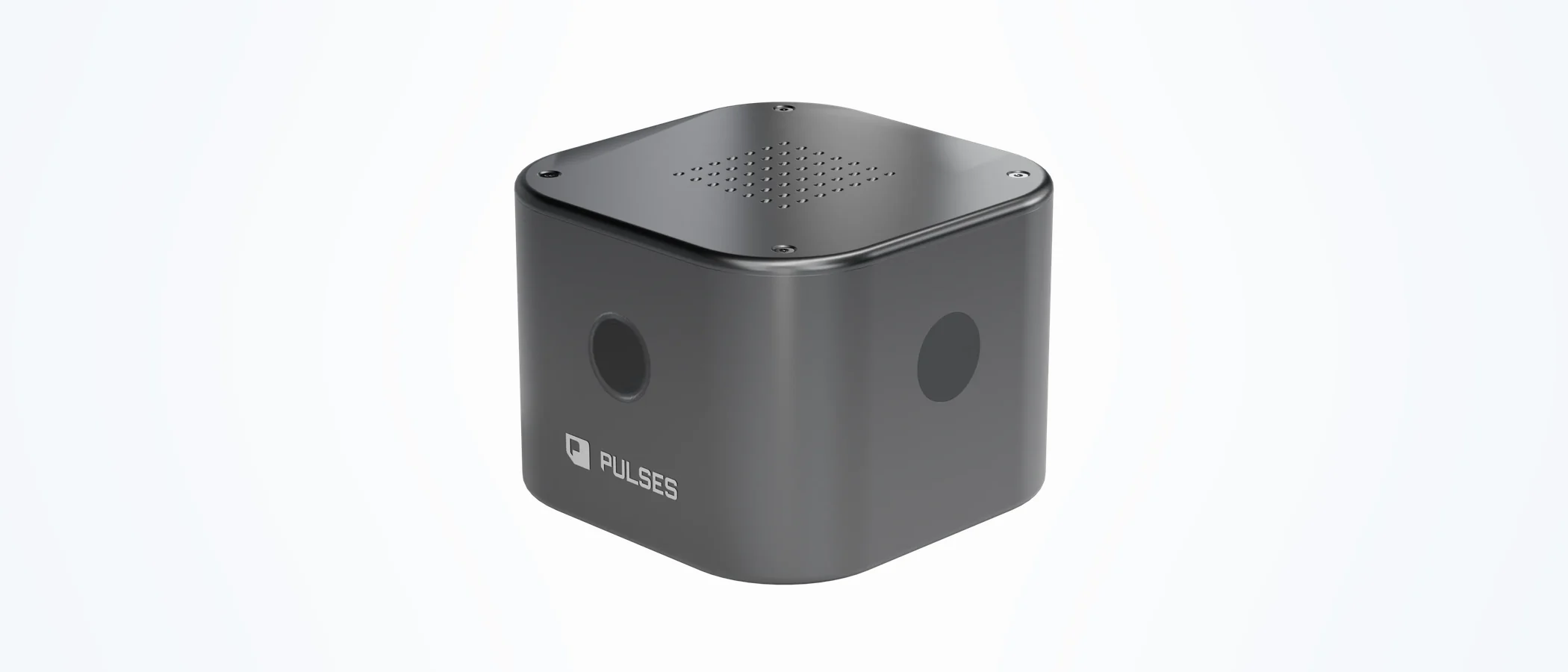
The hardware that makes this possible is the Pulses Vision Tower . A premium, battery-powered, 5G-enabled tower that you place on the floor and walk away from. No network drop. No power run. No installer. Once it is placed, it starts sending live data.
Inside Pulses OS, that intelligence breaks into the three streams event directors care about:
- Pulses CX — the visitor journey. Footfall by hour, by entrance, by zone. Dwell time at sponsor booths and feature exhibits. Visit quality by zone. Funnel conversion — did the people who walked past the activation actually engage with it?
- Pulses Ops — the operational pulse. Live queue lengths at each chokepoint. Concourse capacity. Average wait at registration, accreditation, F&B, and merchandise. SLA alerts the moment a bottleneck forms, not the moment a complaint reaches Twitter.
- Pulses Compliance — the safety layer. Perimeter integrity, restricted-zone access, crowd-density thresholds, hygiene enforcement in F&B back-of-house. The audit trail builds as the event runs.
From Pop-Up to Permanent — Same Platform
For a permanent venue, Pulses installs once and keeps running, event after event. For a temporary build, the Vision Tower goes in on load-in day and pulls out on load-out day. Same platform. Same dashboards. Same intelligence quality.
The same architecture that runs an F1 paddock can run a national exhibition centre, a music festival, a religious gathering, or a sovereign-grade summit. Pulses OS adapts the language and the views to the use case — "humans" becomes "guests," "vehicles" becomes "team cars," and so on, in your operation's own words.
Edge AI, Because Events Move Fast
Pulses processes video on the device. What leaves is anonymous data, not video. There is no wait for a cloud round trip, and no dependency on a stadium Wi-Fi that goes down the moment 60,000 people sit down at once.
That is the difference between "we will tell you what happened" and "we will tell you what is happening, right now."
The events industry is moving — quickly — from a world where the operator finds out what happened after the doors close, to a world where the operator runs the show like an air-traffic controller, with live signals from each part of the floor.
Ready to begin?
Hosting a major event this year? See what Pulses can do on your floor: book a demo.